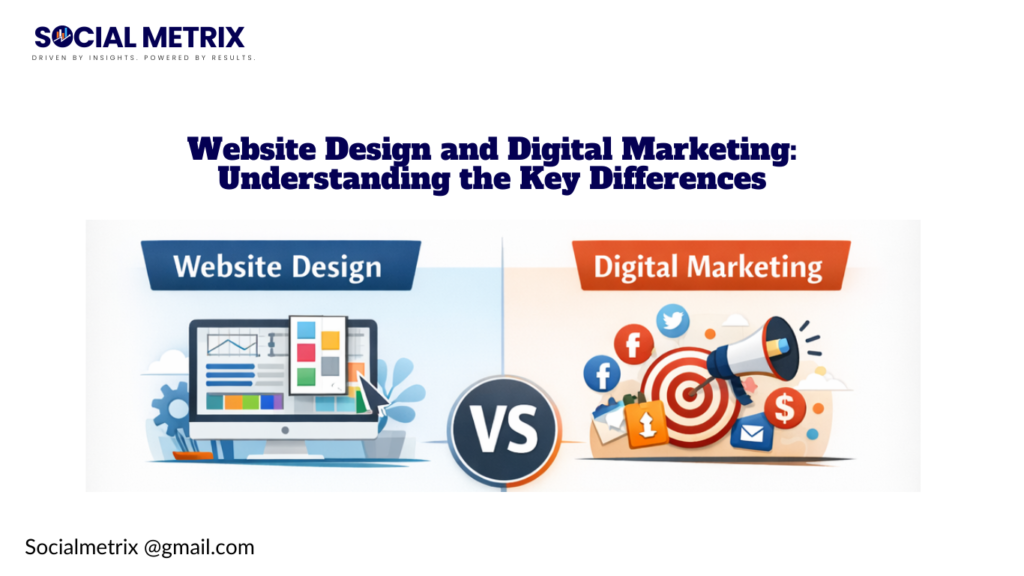
Website Design and Digital Marketing are two essential pillars of a strong online presence. While Website Design and Digital Marketing often work together, they serve different purposes and require distinct skills, strategies, and goals. In today’s digital-first world, many businesses assume that having a website alone is enough, while others invest heavily in marketing without building a strong website foundation. To truly succeed online, it is important to understand how Website Design and Digital Marketing differ—and how they complement each other.
What Is Website Design?
Website design focuses on creating the visual structure, layout, and overall user experience of a website. It ensures that a website is attractive, easy to navigate, responsive across devices, and aligned with the brand’s identity. Website design plays a critical role in how users perceive a business when they visit the site for the first time. A well-designed website builds trust, improves usability, and encourages visitors to stay longer and take action.
What Is Digital Marketing?
Digital marketing focuses on promoting a website and brand through various online channels. It includes strategies such as search engine optimization (SEO), social media marketing, paid advertising, content marketing, and email campaigns. The main goal of digital marketing is to attract the right audience, increase online visibility, generate leads, and convert visitors into customers.
Key Differences Between Website Design and Digital Marketing
1. Purpose and Focus
Website design focuses on how a website looks and functions. Its purpose is to provide users with a smooth and engaging experience once they land on the site. Digital marketing focuses on how users find the website in the first place. It works to attract potential customers, increase reach, and drive meaningful actions such as inquiries, sign-ups, or purchases.
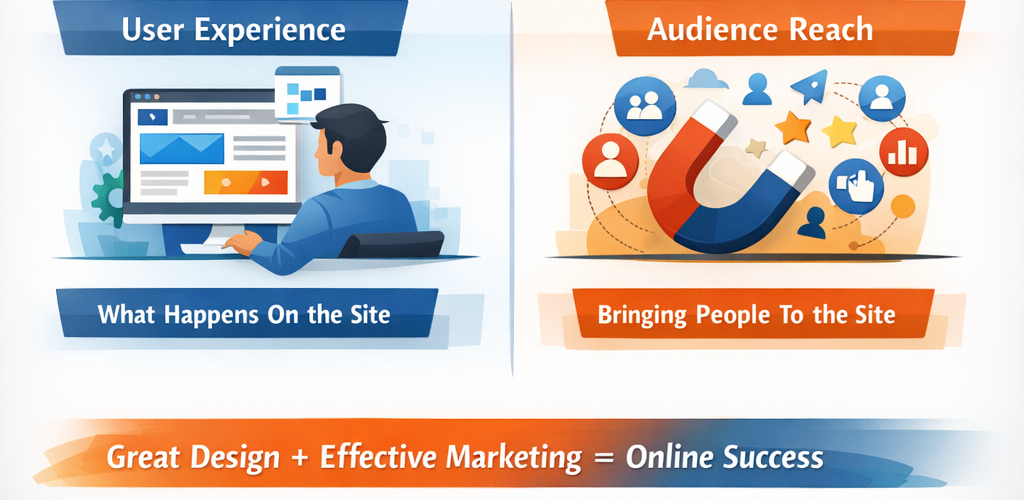
2. User Experience vs Audience Reach
Website design is concerned with the user experience after a visitor arrives on the website. It ensures fast loading times, intuitive navigation, and clear content structure. Digital marketing works before that stage by reaching potential customers through search engines, social media platforms, online ads, and email marketing, and directing them to the website.
3. Visual Creation vs Strategic Promotion
Website design involves creative and technical elements such as layout planning, color schemes, typography, and responsive design. Digital marketing is strategy-driven and includes activities like SEO optimization, content planning, paid campaigns, and performance analysis to promote the brand effectively and achieve measurable results.
4. One-Time Setup vs Continuous Process
Website design is often a one-time project or updated periodically when improvements or redesigns are required. Digital marketing is an ongoing process that requires continuous effort, regular content updates, campaign optimization, audience engagement, and performance tracking to deliver long-term growth.
5. Tools and Skill Sets
Website design uses tools such as Figma, Adobe XD, WordPress, and Webflow, and requires skills in UI/UX design and basic development. Digital marketing uses tools like Google Analytics, Google Ads, Meta Ads Manager, SEO platforms, and email marketing software, and requires expertise in analytics, content strategy, and customer behavior.
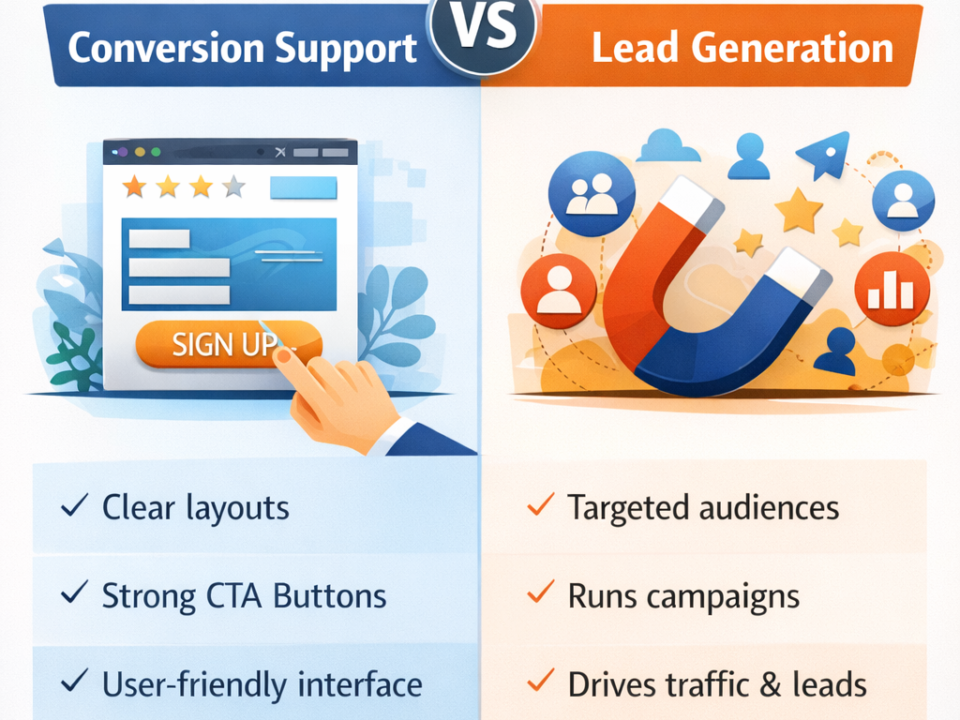
6. Conversion Support vs Lead Generation
Website design supports conversions by creating clear layouts, strong call-to-action buttons, and a user-friendly interface that builds trust. Digital marketing focuses on lead generation by targeting specific audiences, running marketing campaigns, and guiding users to the website through different digital channels.
7. Role in Business Growth
Website design establishes a professional digital presence and strengthens brand credibility. Digital marketing accelerates business growth by expanding reach, increasing engagement, and converting visitors into customers. When combined, Website Design and Digital Marketing create a powerful online strategy that drives sustainable business success.
Conclusion
Website Design and Digital Marketing are not competitors—they are complementary. A well-designed website provides the foundation, while digital marketing ensures that the right audience reaches that foundation at the right time. Businesses that invest in both Website Design and Digital Marketing are better positioned to build trust, increase visibility, and achieve long-term online growth.