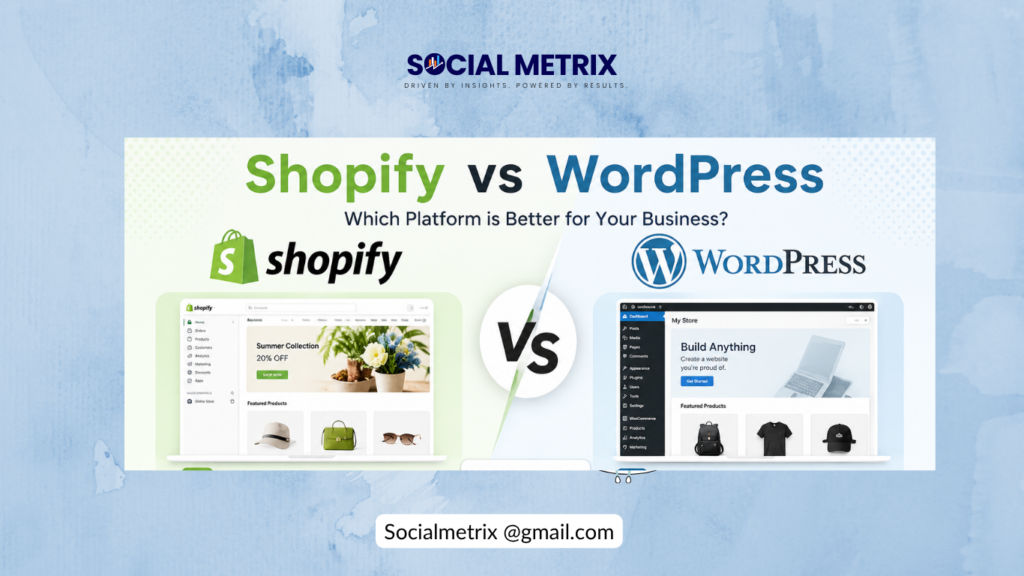
The debate between Shopify vs WordPress has become common among startups, small businesses, and eCommerce brands looking to build a strong online presence. At Social Metric, we help businesses choose the right platform based on their goals, budget, and scalability needs.
When comparing Shopify vs WordPress, it is important to understand that both platforms offer unique advantages. Shopify is a dedicated eCommerce platform, while WordPress is a flexible content management system that can also support online stores through plugins like WooCommerce.
Ease of Use Shopify vs WordPress
One of the biggest differences in Shopify vs WordPress is ease of use. Shopify is beginner-friendly and comes with built-in hosting, security, and payment integration. Users can quickly create an online store without technical knowledge.
WordPress, on the other hand, offers more customization options but requires separate hosting, plugin management, and regular maintenance. Businesses looking for full control over website design often prefer WordPress.
Customization and Flexibility
In the comparison of Shopify vs WordPress, WordPress wins when it comes to customization. Thousands of themes and plugins allow businesses to create unique websites with advanced features.
Shopify also provides professional templates and apps, but customization can sometimes be limited unless advanced coding is used. For businesses that need highly customized websites, WordPress can be the better choice.
SEO Benefits
SEO plays a major role in online growth, and Shopify vs WordPress is often discussed in terms of SEO performance. WordPress is known for its powerful SEO plugins and complete control over website optimization.
Shopify also includes SEO-friendly features, but WordPress gives more flexibility for advanced SEO strategies. At Social Metric, we recommend WordPress for businesses focusing heavily on content marketing and organic traffic.
Security and Maintenance
Another important factor in Shopify vs WordPress is security. Shopify handles hosting, security updates, and backups automatically, making it a low-maintenance option.
With WordPress, users are responsible for updates, security plugins, and backups. While this gives more control, it also requires technical management.
Pricing
The cost difference in Shopify vs WordPress depends on business requirements. Shopify operates on a monthly subscription model, while WordPress itself is free but requires hosting, plugins, and development costs.
Businesses should choose a platform based on long-term needs rather than only initial costs.